Açıklama
Plastik boruların akustik olarak konumlandırılması
Plastik borular elektriksel olarak iletken olmadıklarından, klasik elektromanyetik yöntem vasıtasıyla konumlandırılamazlar. Boru konumlandırılmasındaki diğer bir ilke akustik yöntemle kullanılmaktadır: borular çevreleyen toprağa nazaran mekanik titreşimleri daha iyi iletmektedirler. Titreşimler bir mikrofon (AQUAPHON®) vasıtasıyla belirlenebilecekleri yüzeye toprak üzerinden ve boru boyunca iletilmektedir. Su sızıntılarının akustik konumlandırılmasında olduğu gibi, en yüksek yoğunluk borunun konumunu belirtmektedir. Temel olarak fiber çimento veya metalik borular da bu yöntemle konumlandırılabilir.
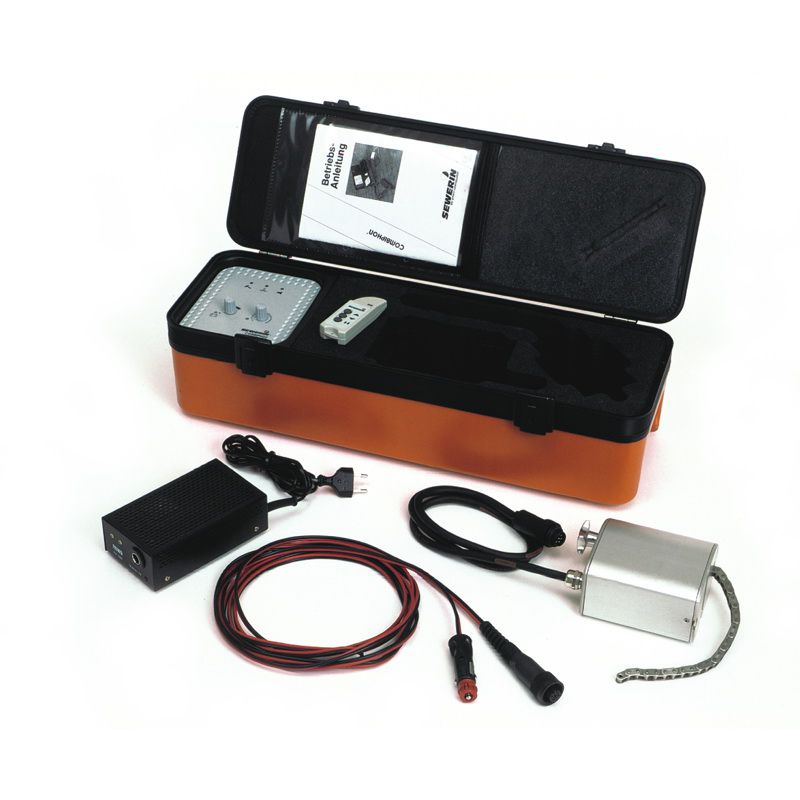
System COMBIPHON® merkezi kontrol birimi jeneratör G5 ve değişik atım jeneratörlerinden meydana gelmektedir.
Servis boruları
(Su veya gaz)
tokmak vasıtasıyla titreşime ayarlıdır. Boru üstüne dıştan tam bir elektrikli balyoz gibi vurmaktadır. Gaz veya hava ile dolu borular, iletken su kolonu eksik olduğundan her zaman sorunsuz değildir.
100 mm’e kadar çaplar için zincirle tutturma, ağırlık: 1.8 kg.
Ana borular – su
Titreşime ayarlanmak için daha fazla enerji gerektirmektedir. Su kolonu musluktan suyun çıkarılması yoluyla harekete ayarlıdır. Su kolonu kapatma gereci, durdurucu vasıtasıyla aralıklarla kısıtlıdır. Yaratılan basınç dalgaları, uzun mesafeler boyunca bile iletilip konumlandırılabilir.
Jeneratör G5’in radyo kontrolü
Ör. bir servis borusunu konumlandırırken, kullanıcı için yoğunluğu değiştirmek üzere kuplaj noktasına geri dönmek gerekli değildir. Bu, ev duvarlarının yakınındaki (gürültü kirliliği) yüksek yoğunlukla çalışmak mümkün olmadığından gerekli olmasına rağmen daha uzun mesafelerde daha fazla güce ihtiyaç duyulmaktadır. Dışarıda 300 m’e kadar ve bodrumdan yaklaşık 30m’lik aralıklara iletim mümkündür.
Jeneratör G5’in teknik verileri
Güç kaynağı: gömülü kurşun accu, potansiyel 12 V adaptör veya 12 V akü
İşletim zamanı: Tokmak ile, 5 – 80 saat arasında (yoğunluğa bağlı olarak)
İşletim sıcaklığı: -10 0C’den +50 0C’e kadar
Koruma sınıfı: IP 54’e istinaden sıçrama korumalı (adaptörsüz)
Boyutları (G x Y x D): 60 x 19 x 21 cm
(tokmak ve adaptör için kompartman, akü L)
Ağırlık: adaptörle yaklaşık 6,3 kg.
Akustik plastik borular bulma
Prensip
Onlar elektro-iletken değildir çünkü plastik borular, geleneksel elektromanyetik yöntemlerle yer olamaz. Boru bulma akustik yöntemi farklı bir ilke geçerlidir: borular çevreleyen zemin daha iyi mekanik titreşimleri iletir. Onlar bir zemin mikrofonu tarafından alınabilir nerede boru uygun titreşime neden olduğunda, bu titreşimler yeryüzüne boru boyunca yayıldı.Yoğunluğu yüksek olduğu su sızıntılarını akustik vasıtasıyla tespit edildiği gibi aynı şekilde, boru hattı yer almaktadır. Bu yöntem, aynı zamanda fiber çimento boru ve metal boru bulmak için de kullanılabilir.
COMBIPHON ® sistemi G5 Jeneratörü merkezi kontrol ünitesi ve çeşitli darbe jeneratörleri oluşur. Bu nedenle, her yerde kullanılabilir.
G5 Jeneratörü Uzaktan kumanda
Ev bağlantıları bulurken, yoğunluk ayarlama kaçınılmazdır - bu jeneratör yakın ses kirliliği neden olur ise, örneğin, bir yüksek yoğunluklu, büyük bir mesafe boyunca gereklidir. Bir uzaktan kumanda kullanıcının jeneratöre geri devam etmek zorunda değildir anlamına gelir.
Su veya gaz ev servis bağlantıları
Bir Knocker kullanarak titreşmeye neden olur. Bu sürekli elektrikli bir çekiç gibi dışarıdan boru musluklar. Hiçbir verici su sütunu olarak orada Gaz veya hava ile dolu borular bazen sorunlu olabilir.
Su şebeke
titreşimle daha fazla enerji gerektirir.Su kolonu hidrant bir tıpa kullanarak ses seviyesini kontrol ederek harekete geçer.Çıkan dalgaları sonra yaymak.Basınç borusu içinde ani basınç önlemek için bir manometre kullanılarak kontrol edilir.Ses büyük mesafelerden tespit edilebilir.
akustik boru konumu
Zemin mikrofonu ile borular Konumlandırılması
Boru hattı Knocker veya Stopper ile titreşime neden edildikten sonra, konumu zemin mikrofonu kullanılarak belirlenirse. Bu sistematik kısa aralıklarla toprak yüzeyine test içerir.AQUAPHON ® A 100 alıcı gürültü yoğunlukları doğru bir görsel ve akustik karşılaştırma görüntüler.Gürültü yüksek sesle veya yumuşak alıyor mu?
Eğer titreşimli boru hattına yakın olsun hacmi artar.Sinyali doğrudan boru üzerinde yoğun olduğu, sonra tekrar yoğunluk azalmaya başlar.Görsel ekran acemiler ya da sık sık sistemi kullanmak istemeyenler için özellikle yararlıdır.
İşitme koruma fonksiyonu
AQUAPHON ® A 100 yerine getirir tüm güncel mesleki sağlık ve güvenlik gereksinimleri. Yeterli işitme koruması özellikle önemlidir.Test çubuğunun temas noktası kaymış halinde meydana geçmişte tatsız ve hatta bazen tehlikeli akustik basınç, kulaklıklar çok erken veya çok geç aktive edildi veya bir nesne doğrudan zemin mikrofonu yanındaki yere düştü. Bu artık yeni teknoloji sayesinde geçmişte bir şeydir.Gelen ses sinyali sürekli olarak izlenir.Gürültü çok yüksek alırsa, kulaklık tarafından geçirilen ses boğuk.Sinyalleri yüksek sesle almaya devam ederseniz, kulaklıklar kapatılır.Gürültü kaynağı sessiz gider kez AQUAPHON ® A-100 otomatik çalışmalarına başlanması tavsiye.Işitme koruma fonksiyonu çeşitli operasyonel ortamlarda ve farklı kullanıcılar için özelleştirilebilir.
Filtre Optimizasyon fonksiyonu
AQUAPHON ® A 100 yenilikçi filtre Optimizasyon fonksiyonu daha kolay doğru su sızıntılarını saptamak için yapar. Bu zemin mikrofonu bir kaçak gürültüsü tespit etmiştir durumlarda özellikle yararlıdır ama sızıntının tam konumunu nedeniyle gürültülü ortam etkileri belirlemek zordur.Alıcı zemin mikrofonu kullanarak ses örneği kaydeder ve analiz eder. Daha sonra otomatik olarak, özellikle açıkça kaçak yapı-kaynaklı ses ayıran uygun bir frekans aralığına geçer.Akım ölçüm noktasında gürültü yoğunluğu için analog minimum değeri.Akım ölçüm noktasında gürültü yoğunluğu için Analog değer.
Mikrofonlar
Zemin mikrofonu BO-4 1 - Sabit yüzeyler için idealdir. Ayrı bir akustik merkezi ile katı metal ısıtmaya en iyi şekilde hareket özgürlüğüne için zemin sayesinde eşitsizlik ile ayarlanabilir.
Zemin mikrofon 3P-4 2 - sabit olmayan yüzeyler için kullanılır. Bir başak yumuşak zemin için üzerine vidalanabilir.Üç ayak her zaman istikrarlı temas sağlamak.
Yanı sıra akustik boru hattı konum olarak, bir A 100 de profesyonel, elektro-akustik su kaçak tespiti için kullanılabilir.A 100 alıcı metal boru ve cam elyaf probları bulmak için de kullanılabilir.